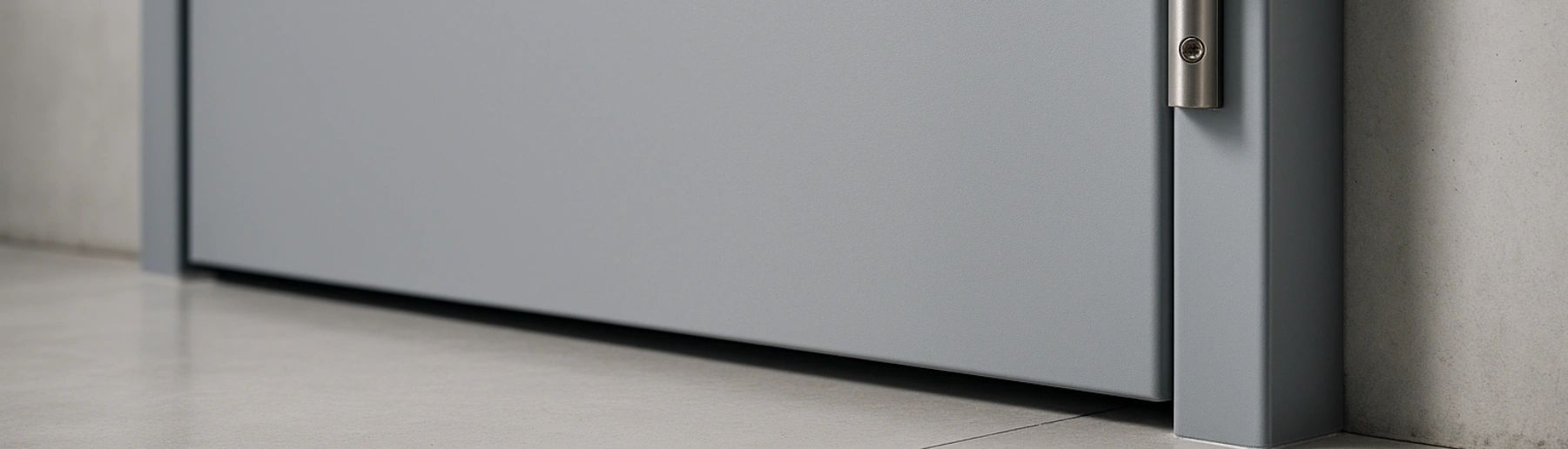
Fire and smoke protection doors are essential components of preventive fire protection in buildings. Their purpose is clear: in the event of a fire, they must prevent—or at least significantly delay—the spread of flames and smoke. A frequently underestimated yet critical detail in this context is the floor gap—the distance between the bottom edge of the door leaf and the finished floor level. Although often overlooked, this gap plays a decisive role in the effectiveness of the door and in compliance with legal requirements.
The Role of the Floor Gap in Fire and Smoke Protection
The floor gap is not a coincidence but a precisely defined measurement with a direct impact on the performance of a fire or smoke protection door:
- Smoke Protection For smoke protection doors—often combined with fire protection properties (e.g., T30-RS)—the floor gap is of utmost importance. Smoke is the primary danger in a fire and often accumulates in the lower areas of a room. A gap that is too large allows smoke to pass freely, compromising escape routes and visibility—rendering the protective function ineffective.
- Fire Protection Even for pure fire protection doors, the floor gap plays a role, though less critical than for smoke protection. Excessive gaps can allow flames to penetrate or intensify fire spread, compromising the door’s ability to serve as a fire barrier.
Applicable Standards and Maximum Permissible Dimensions
The requirements for the floor gap are defined in specific standards and regulations that must be observed during planning, installation, and inspection. In Germany, these include:
DIN 18095 (Smoke Protection Doors)
- Maximum floor gap: 7 mm
- For doors with drop seals: up to 20 mm is allowed if the seal reduces the gap to the required 7 mm when the door is closed.
DIN 4102-5 (Fire Protection Doors)
- No fixed maximum floor gap is defined, as the focus lies on fire resistance classification.
- The approval documents (building-type approval or test certificate) specify the permissible gap dimensions or the required method of sealing the bottom edge.
- In practice, values similar to smoke protection doors are often used—commonly 7 mm or solutions with drop seals.
Importance of Correct Installation and Inspection
Compliance with the permissible floor gap is not merely a technical detail—it has far-reaching implications:
- Approval and Building Certification Inspectors verify correct installation during building acceptance. If the floor gap exceeds allowed limits, the door will be rejected, potentially jeopardizing the building’s operating permit.
- Liability In the event of a fire, a non-compliant floor gap can result in significant liability issues for planners, building owners, and contractors, as the door’s intended protection was not ensured.
- Operational Safety Beyond legal obligations, correct installation ensures real protection of people and property. Only fully functional fire and smoke protection doors contribute effectively to the fire protection strategy.
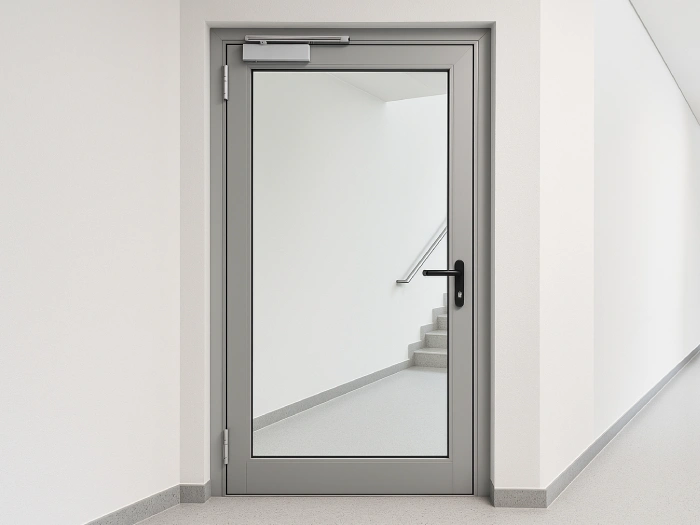
T30 RS Door: Combined Fire and Smoke Protection in One Component
In preventive fire protection, specialized doors are indispensable. T30 RS doors are particularly effective because they offer both fire protection and smoke protection in a single certified building component. Understanding this dual protective function is essential for planners, building operators, and property owners.
Dual Protection in Detail
- T30 – Fire Protection “T30” stands for fire-retardant. A T30 door—tested according to DIN 4102-5—must withstand fire for at least 30 minutes without losing its ability to serve as a barrier. This significantly delays the spread of flames and heat, providing critical time for evacuation and firefighting.
- RS – Smoke Protection “RS” stands for smoke-tight, tested according to DIN 18095. This ensures that the door maintains smoke-tightness for a defined period—a crucial factor since smoke is often far more dangerous than fire due to toxicity and loss of visibility. Together, these features make T30 RS doors powerful safety elements that address both the visible and invisible dangers of a fire.
Typical Applications and Their Importance
T30 RS doors are used in a wide range of building types, particularly where escape routes or fire compartments must be protected from both fire and smoke:
- Stairwells and corridors: Essential for maintaining smoke-free evacuation routes.
- Access to technical rooms: Prevent the spread of fire and smoke from areas with high fire loads.
- Connecting corridors: Between building sections where dual protection is required.
Key Considerations for Planning and Installation
The full protective performance of a T30 RS door is only ensured when planning, installation, and maintenance are performed professionally:
- Approvals and certificates: Must have valid type approvals (abZ) or construction approvals (aBG).
- Correct installation:
- Max. floor gap: 7 mm
- Proper frame sealing
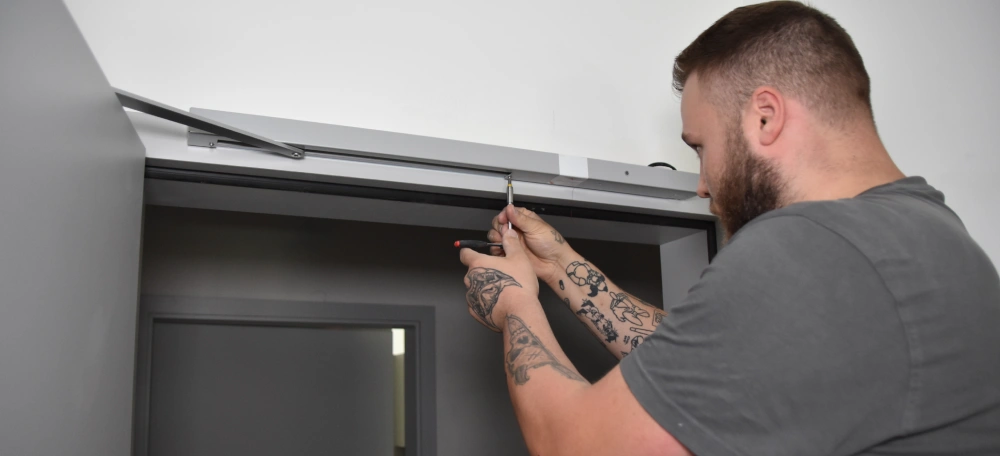
- Fully functional closing mechanisms
- Regular inspections: Required by law and essential to ensure long-term functionality.
A T30 RS door is more than just a door—it is a certified safety component that actively helps protect lives and minimize damage in a fire. Its integrated protective performance makes it an intelligent and indispensable element of modern fire protection concepts.