

Brandschutz Service Berlin

 und dem

Fire protection doors are essential components of structural fire protection. Their purpose is to prevent—or at least significantly slow—the spread of fire and smoke within a building. The classification of these doors, particularly the fire resistance classes T30, T60, and T90, provides clear information on their fire resistance duration. Understanding these classes is vital for planning and installing such doors correctly.
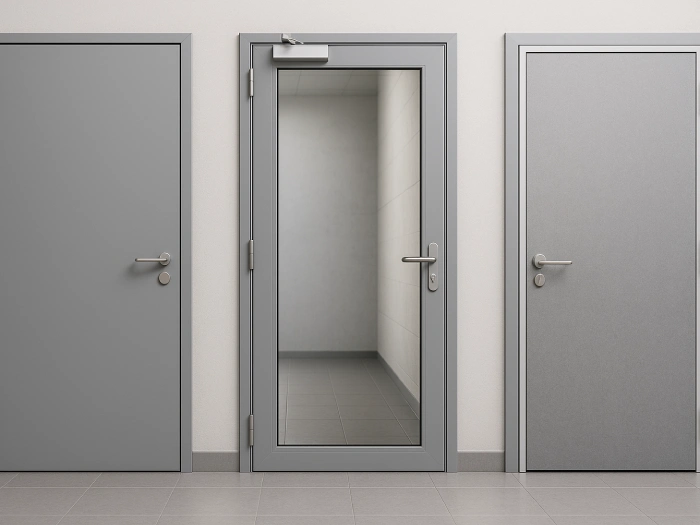
The performance of fire protection doors is assessed through rigorous testing procedures based on standards such as DIN 4102-5 or EN 1634-1. The fire resistance duration indicates how long the complete door element—including door leaf, frame, fittings, and any glazing—maintains its integrity under fire exposure. This includes preventing the passage of flames and smoke, and depending on classification, limiting heat transfer to the non-fire side.
Properly functioning fire protection doors enable safe evacuation and provide emergency responders with valuable time to combat the fire.
The names of the fire protection classes are standardized and indicate the minimum fire resistance duration in minutes:
These doors withstand fire for at least 30 minutes and are classified as fire-retardant. Typical use:
Areas with low to moderate fire risk, such as access to boiler rooms, basements, or as separation between stairwells and residential units. They delay fire spread and enable initial evacuation.
T60 doors provide a minimum of 60 minutes of fire resistance and are considered highly fire-retardant.
Typical use:
Buildings with high occupant density or increased fire risk—for example, corridors in schools, hospitals, hotels, or larger office buildings. The longer resistance time allows extended evacuation and supports early firefighting efforts.
Doors in this class offer at least 90 minutes of fire resistance and are classified as fire-resistant.
Typical use: Mandatory in areas with very high fire risk or as components of fire walls. Examples include industrial facilities, underground car parks, large storage halls, or specific sections of high-rise buildings. Their use is crucial for effectively separating large fire compartments and preventing extensive fire spread over long periods.
Modern fire protection doors can combine multiple protective functions, identified through additional markings:
Choosing the appropriate fire protection class is a complex process. It must always consider building class, type of use, requirements for escape and rescue routes, and state building regulations (Landesbauordnungen) as well as special construction codes.
Early coordination with fire protection experts and the executing specialist company is essential to ensure compliance with all applicable standards and to achieve the highest level of safety. Errors in specification or installation can lead to serious consequences—including jeopardizing a building’s operating permit.
You must uploadreCAPTCHA the content to submit the form. Please note that this involves sharing data with third parties.
More Information