Brandschutz Service Berlin

 und dem
Fire-resistant glass is a crucial component of modern building fire protection. It not only enables the creation of bright, open spaces but also provides essential protection against the spread of fire and smoke in an emergency. Choosing the correct fire-resistant glass classification is critical to ensuring maximum safety.
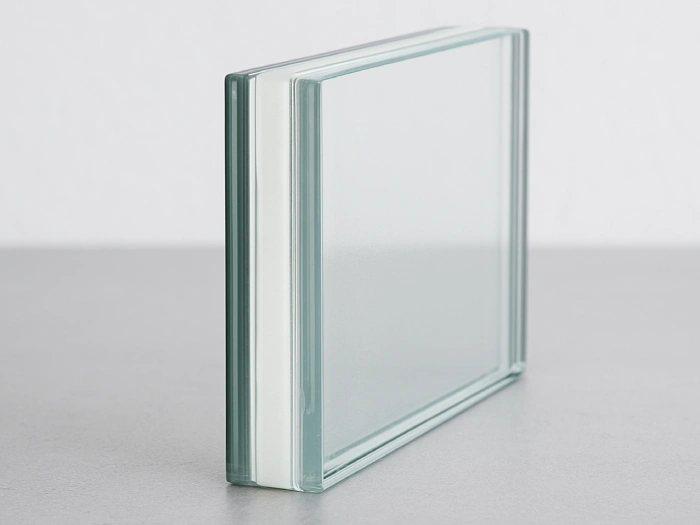
Fire-resistant glass is a specially engineered glazing designed to maintain its protective function for a defined period during a fire. It prevents the rapid spread of flames, hot gases, and smoke, helping to keep escape and rescue routes clear and limiting the fire load. Its protective effect is achieved through various technologies, such as special interlayers that foam and form an insulating barrier when exposed to heat.
The primary function of fire-resistant glass is to delay the spread of fire. This provides occupants with sufficient time to evacuate and supports emergency responders during firefighting operations.
Fire-resistant glass is classified into different categories that define its level of protection. Classification is based on European standards (EN 13501-2) and indicates the duration of fire resistance and the type of protection provided:
Glass in this category prevents the passage of flames and smoke but does not protect against radiant heat on the non-fire side. It is commonly used in areas where limiting fire spread is the main priority and where no occupants are at immediate risk.
In addition to meeting class E requirements, EW glass reduces radiant heat transmission, though only to a limited degree. The surface temperature on the non-fire side increases moderately. These products are suitable for areas where some reduction of radiant heat is needed.
EI glass provides the highest level of protection. It prevents the passage of flames and smoke and significantly limits heat transfer to the non-fire side. The surface temperature remains below critical thresholds for a defined time, ensuring that people near the glass are protected from heat exposure. This class is essential for escape routes, rescue routes, and high-occupancy areas.
The number following the classification (e.g., EI 30, EW 60) indicates the number of minutes the glass maintains its fire resistance.
Choosing the appropriate fire-resistant glass class depends on several factors:
Fire-resistant glass is commonly used in fire doors, partitions, facades, and roof constructions to establish and maintain designated fire compartments.
You must uploadreCAPTCHA the content to submit the form. Please note that this involves sharing data with third parties.
More Information